

Table of Contents
- Semi Private Training vs Group Classes: Key Differences at a Glance
- What Semi Private Training Actually Looks Like
- The Benefits of Small Group Training: Coaching, Community, and Consistency
- Semi Private Training Cost: What You’re Paying For
- Semi Private Training for Beginners: Starting Strong Without Getting Lost
- Safety, Adaptations, and Special Considerations
- How to Evaluate a Provider and Choose What Fits You
- Conclusion: Making the Right Call for Your Goals
- Frequently Asked Questions
Last Updated: October 5, 2026
Semi Private Training vs Group Classes: Key Differences at a Glance
Semi private training is small-group coaching with a low coach-to-client ratio; group classes are larger, instructor-led sessions where everyone follows the same workout. That structural difference shapes attention, programming, pace, and cost. This guide from TRV|FIT Berkley breaks down how semi private training vs group classes compare, so you can pick the format that fits your goals, experience level, and budget.
The core distinction comes down to individualized coaching. In semi private training, a coach works with a small group, often two to six people, adjusting exercise selection and load for each person. American College of Sports Medicine exercise guidelines notes that individualized programming and proper form correction are central to safe, effective training, and that is exactly where the two formats diverge.
Quick Comparison Table
| Factor | Semi Private Training | Group Classes |
|---|---|---|
| Group size | Small group (roughly 2-6) | Large group (often 15-30) |
| Coach-to-client ratio | Low, close attention | High, shared attention |
| Programming | Personalized to your goals | Same workout for everyone |
| Form correction | Frequent, individual | Limited, group-level cues |
| Pace | Adjusted to your level | Set by the class |
| Community | Tight, familiar faces | Energetic, larger room |
| Cost per session | Higher than a class | Lower per session |
| Best for | Specific goals, beginners, plateaus | General movement, variety, budget |
What Semi Private Training Actually Looks Like
A typical semi private session runs 45 to 60 minutes with a warm-up, strength block, conditioning finish, and cooldown.
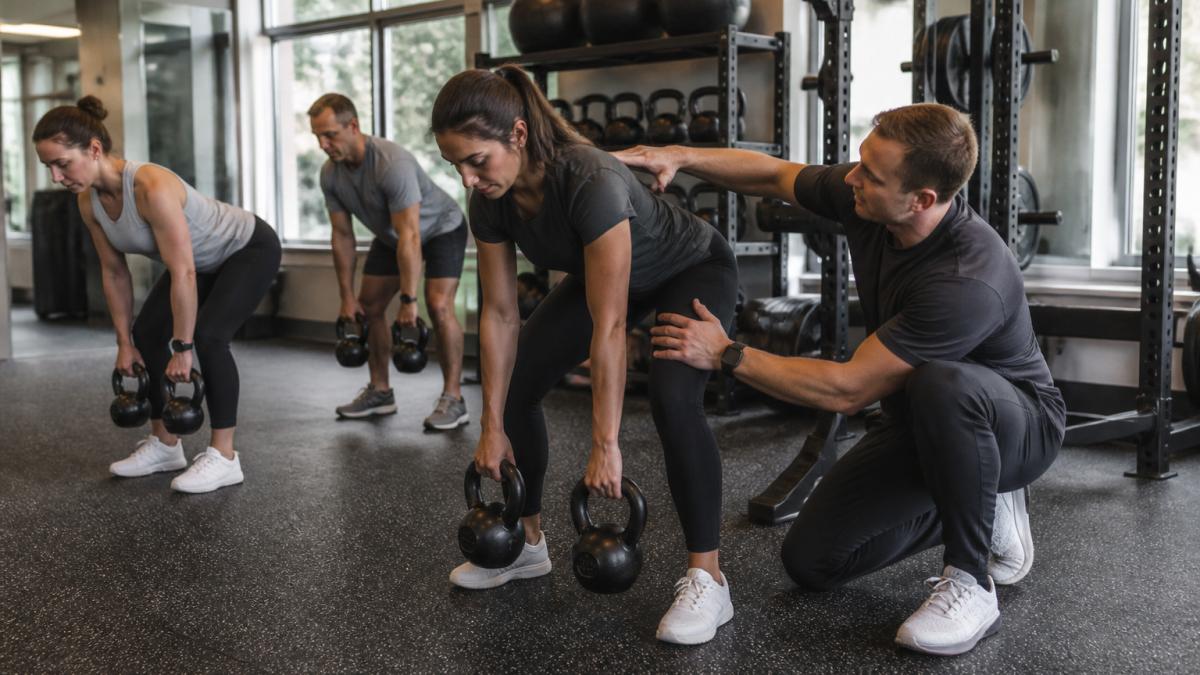
Here is what a session usually includes:
- A movement prep tailored to the day’s focus
- Strength training with loads set for your level
- Exercise variations when something does not fit your body
What nobody tells you about semi private training is how much the shared format changes accountability.
Ask any provider how they handle different fitness levels in the same session. A good answer describes movement modifications and separate loading, not “everyone does the same thing and scales it themselves.”
The Benefits of Small Group Training: Coaching, Community, and Consistency
The benefits of small group training come from three places: coaching attention, social support, and the consistency that follows when you enjoy showing up.

What’s the Deal with Semi-Private Training?
Equity Fitness
Accountability is the quiet engine. When a coach knows your name and goals, missed sessions get noticed, and when a training partner expects you, skipping feels different.
Community carries the training environment too. A small group builds familiarity fast, lowering intimidation for beginners and keeping experienced members engaged.
Progress tracking works best when someone else is watching the numbers. In a small group, your coach can log loads, spot plateaus early, and adjust your training plan before you stall.
Semi Private Training Cost: What You’re Paying For
Semi private training cost sits between group classes and one-on-one coaching, because you share the coach’s time with a few others. That shared cost is the point: individualized coaching without the full private rate. But “in between” is not a number, compare formats by breaking the price down to cost per coached session.
The math behind the price
Every coached format sells the same scarce resource: one coach’s attention, measured in minutes. A 60-minute session with one client delivers 60 coach-minutes; with four clients, roughly 15 each. That is why semi private training costs less than private training and more than a class, you buy a larger slice of attention than a class, a smaller slice than one-on-one.
A simple way to see it:
- One-on-one: one client absorbs the full session fee.
- Semi private (2-6 people): the session fee is split across a small group, so each person pays a fraction of the private rate while still getting direct coaching.
- Group class (15-30 people): the fee is split across a large room, so the per-person price drops, but so does the coach-minutes each person receives.
What actually moves the price
Four variables drive most pricing differences:
- Group size. A cap of two or three costs more per person than a cap of six, because fewer people are splitting the coach’s time.
- Sessions per week. Two sessions a week costs more per month than one, but the per-session rate often drops when you commit to a higher frequency.
- Billing model. Some providers charge per session; others sell monthly packages or multi-month commitments. A monthly package can look expensive next to a drop-in class fee while costing less per coached session.
- What is bundled. Assessment, programming, progress tracking, and app access may be included or sold separately. Two providers can quote the same monthly figure and deliver very different amounts of coaching.
Compare cost per coached session, not the headline
The most useful comparison is cost per coached session at a stated group size. Ask each provider: What is the maximum group size? How many sessions are included? What is the total monthly cost? Divide the monthly total by sessions for your real per-session cost, then note the group cap.
For current TRV|FIT Berkley pricing, check our pricing page directly.
Do not compare a monthly membership at a big-box gym to a semi private package and call it a fair fight. One sells access to equipment; the other sells coached sessions. Compare cost per coached session at a stated group size to see the real difference.
When a provider quotes a monthly rate, ask what happens if you miss a week, whether sessions roll over, expire, or can be made up. That policy is part of the price, even when it is not on the page.
Semi Private Training for Beginners: Starting Strong Without Getting Lost
Semi private training for beginners solves the most common problem new members face: feeling lost in a large class with no idea whether their form is right.
If you are new to strength training, the format builds a plan around your starting point rather than the room’s average.
CDC physical activity recommendations for adults recommends a mix of aerobic activity and muscle-strengthening work each week, and beginners often need help structuring both.
Safety, Adaptations, and Special Considerations
Safety depends on matching the work to the person. Semi private training makes that easier: the coach can adjust variations, reduce load, and modify range of motion in real time, harder to manage in a large class.
If you are 50 or older, returning after a long break, or managing an age-related health condition, talk with your physician before starting a new program and share any restrictions with your coach. National Institute on Aging exercise guidance notes that staying active supports strength, balance, and independence with age, and that the right approach depends on your current health.
Special considerations worth raising with any provider:
Fill out the form below to get started →
- Past injuries or surgeries that affect movement
- Joint issues that need modified range of motion
- Balance concerns that call for added support
None of this rules out semi private training. It just means the coach needs to know, so the programming fits.
How to Evaluate a Provider and Choose What Fits You
Choosing between semi private training vs group classes comes down to your goals, experience level, and how much individual attention you need. Use this framework, then the evaluation questions below, before you sign anything.
A quick decision framework
Answer these four questions in order, the first yes usually points to your format.
- Do you have a specific goal that needs a plan, strength numbers, a return from injury, a sport, or fat loss? If yes, semi private training fits better, because the programming can be built around that goal.
- Are you new to strength training or unsure whether your form is correct? If yes, semi private training gives you coaching from the first session instead of guesswork.
- Have you been training consistently and just want variety, energy, and a lower per-session cost? If yes, group classes are a strong fit.
- Is budget per session the deciding factor and you are comfortable scaling movements yourself? If yes, group classes win on price.
If you are between the two, a common pattern is to start in a small group to build technique and confidence, then add classes for variety once the basics are automatic.
Pick semi private training if:
- You have specific fitness goals, like strength or fat loss
- You are a beginner who wants form correction from day one
- You have hit a plateau and need personalized programming
Pick group classes if:
- You want variety and high-energy sessions
- You are comfortable self-scaling movements
- Budget per session is the deciding factor
Questions to ask before you enroll
Bring this list to any provider. The answers tell you more than the marketing page does.
About the coach
- What certifications do the coaches hold, and are they current?
- How long has the coach been training clients, and with people at your level?
- Does the coach have experience adapting workouts for injuries or mobility limits?
About the group
- What is the maximum number of people in a session, and is that cap enforced?
- How does the coach handle a room with mixed experience levels?
- What happens if the session is full, is there a waitlist or a backup time?
About the programming
- Is there an initial assessment, and what does it measure?
- Is the plan written for you, or adapted from a template on the day?
- How often is the program reviewed or changed?
About progress and logistics
- How is progress tracked, logged loads, measurements, or check-ins?
- What is the cancellation and make-up policy?
- What is the total monthly cost, and what does it include?
A provider that answers these clearly usually runs a tight program. Vague answers, especially about group size and assessment, signal to keep looking.
At TRV|FIT Berkley, we offer both formats under one roof, along with personal training, sports performance, and nutrition guidance, so members can start in a class and move into semi private coaching as their goals sharpen.
People who want coached attention without the price of one-on-one sessions, especially beginners and adults managing age-related fitness goals.
Conclusion: Making the Right Call for Your Goals
The best format is the one you will actually stick with. Semi private training wins when you need attention, structure, and accountability; group classes win when you want energy, variety, and lower cost per session.
At TRV|FIT Berkley, we built our programs so you do not have to guess. Between semi private training, group classes, personal training, and nutrition guidance, we match the format to your goals and adjust as you progress.
Frequently Asked Questions
How is semi private training different from group classes?
Semi private training typically caps sessions at two to four people per coach, while group classes often have 10 or more participants following one routine. In semi private training, the coach can adjust exercise selection, pace, and movement modifications for each person. Group classes follow a set plan with less individual feedback. The semi private training format prioritizes form correction and personalized programming over class energy and music-driven pacing.
Is semi private training worth the extra cost compared to group classes?
It depends on your goals. If you want individualized coaching, faster progress on specific fitness goals, and accountability that keeps you consistent, the semi private training cost often reflects that value. Group classes can be a budget-friendly way to stay active, but they offer less personal attention. Many people find that semi private training reduces wasted sessions because each workout is tailored to their training plan and experience level.
Can beginners join semi private training?
Yes. Semi private training for beginners is common and often recommended. A good coach will assess your fitness level, teach foundational movements, and provide exercise variations that match your current ability. The small group setting means you get form correction and support without the pressure of keeping up with a large class. Beginners often progress faster because they learn proper technique from the start.
What is a typical coach-to-client ratio in semi private training?
Most semi private training sessions use a coach-to-client ratio of 1:2 to 1:4. This allows the trainer to give individualized coaching, watch movement patterns, and offer real-time feedback. Some facilities may stretch to 1:6, but the quality of attention drops as the ratio widens. When evaluating a provider, ask about their maximum group size and how they handle different fitness levels in the same session.
How many people are usually in a semi private training session?
Semi private training sessions usually have two to four participants per coach. Some programs allow up to six, but the defining feature is that the group stays small enough for shared coaching to feel personal. This size supports community and motivation while still allowing the trainer to modify exercises for each person’s fitness goals and any injuries or limitations.


