

Table of Contents
- Why Start Boxing Training Now
- What You’ll Need: Essential Boxing Gear for Starters
- Master the Basics: Boxing Stance and Footwork
- Learn Basic Boxing Punch Combinations
- Defensive Fundamentals: Slipping, Blocking, and Weaving
- Your First Boxing Workout Routine for Beginners
- Finding a Gym and Overcoming Mental Hurdles
- Conclusion: Your First Step Toward Boxing Training
- Frequently Asked Questions
Last Updated: September 4, 2026
Why Start Boxing Training Now
Boxing training is one of the most effective full-body conditioning methods available, combining cardiovascular endurance with functional strength, coordination, and mental focus. Few fitness disciplines deliver such a complete package in a single session.
Most beginners hesitate because they assume boxing requires a high baseline fitness level or prior combat experience. That assumption is wrong. Boxing training scales to your current condition, whether you are stepping into a gym for the first time or returning after years away.
At TRV|FIT Berkley, we have seen how structured boxing training transforms not just physical health but confidence and mental resilience. This guide walks you through the gear, techniques, and routines you need to begin safely and build momentum.
What You’ll Need: Essential Boxing Gear for Starters
Beginning boxing does not require an expensive equipment haul, but buying the wrong items wastes money and can compromise your safety. The gear market is crowded with options ranging from $20 starter sets to $300 pro-level gloves. Most beginners do not need the premium tier.
Worth the Investment
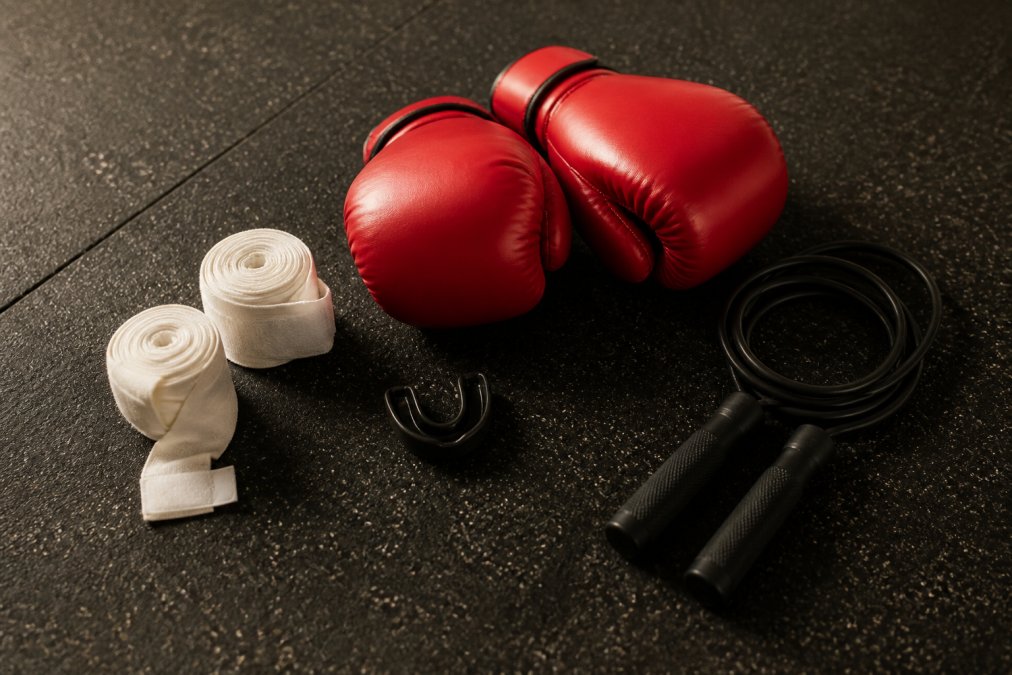
Hand wraps ($10-$15): These are non-negotiable. Wraps protect your knuckles and stabilize your wrist joint, which absorbs significant force even on a heavy bag. The standard 180-inch length provides proper wrist support when wrapped correctly. Buy two pairs so one can air out between sessions. Mexican-style wraps with a bit of elastic offer the best balance of support and comfort.
Boxing gloves ($50-$80 for beginners): The glove is your primary tool, but you do not need top-tier leather gloves on day one. Look for a 14-16 oz glove for bag work and pad work. Heavier gloves build shoulder endurance and protect your hands. Avoid the cheapest vinyl options, they break down quickly and offer poor wrist support. Reputable entry points include brands like Sanabul, Ringside, and Everlast’s higher-end lines.
Mouthguard ($15-$30): If you plan to spar or do partner drills, a mouthguard is mandatory. Boil-and-bite options from brands like Shock Doctor or SISU provide adequate protection for beginners. Custom-fitted guards from a dentist run $100-$200 and are worth it only if you spar regularly.
Jump rope ($10-$20): A basic speed rope is sufficient. Skip the weighted ropes until you build coordination. This is a conditioning tool, not a precision instrument.
Skip for Now
Boxing shoes ($60-$120): Unless you are sparring seriously, cross-training shoes with flat soles work fine. Boxing shoes provide ankle support and pivot ability, but they are not necessary for your first months of bag work and shadowboxing.
Headgear ($50-$150): Only needed for sparring. If your gym requires it for sparring, most gyms have loaner headgear for beginners. Purchase your own only when you commit to regular sparring.
Heavy bag for home ($100-$300): Gym-based training is superior for beginners because coaches correct your form in real time. A heavy bag at home can reinforce bad habits if you practice without supervision. Wait until you have developed proper mechanics before investing in home equipment.
The Budget Breakdown
A realistic starter budget looks like this:
- Hand wraps: $10-$15
- Gloves: $50-$80
- Mouthguard: $15-$30
- Jump rope: $10-$20
- Total: $85-$145
That is less than two months of a typical gym membership. The USA Boxing’s beginner equipment guidance emphasizes that proper fitting equipment matters more than premium brands when you are starting out.
Buy hand wraps before gloves. Wrist injuries are the most common beginner complaint, and proper wrapping prevents most of them. Ask a coach to show you the correct wrapping technique during your first session.
One additional consideration: gym membership costs. Monthly rates at boxing gyms in the United States typically range from $50 to $150 depending on your city and the facility’s amenities. Some gyms offer punch cards or drop-in rates for beginners who want to test the waters before committing to a membership.
Master the Basics: Boxing Stance and Footwork
Your stance is the foundation of every punch, defensive move, and combination you will throw. A proper boxing stance keeps you balanced, protected, and ready to move in any direction.
Stand with your feet shoulder-width apart, your weaker foot slightly forward, and your weight distributed evenly. Keep your knees soft, elbows tucked, and hands guarding your chin. From this position, practice small steps forward, backward, and sideways without crossing your feet. This footwork creates the platform for all offensive and defensive actions.
Many beginners neglect footwork because it feels less exciting than punching. That is a mistake. Boxing training fundamentals prioritize movement because every punch derives power from your legs and hip rotation, not your arms.
Learn Basic Boxing Punch Combinations
The four foundational punches in boxing are the jab, cross, hook, and uppercut. Each serves a distinct purpose and travels a different path to the target. The jab is your range finder and setup punch, thrown straight from your lead hand.
The hook targets the side of the head or body, traveling in a horizontal arc with your lead or rear hand. The uppercut rises vertically to target the chin or torso at close range. Before combining punches, master each one individually on the heavy bag or with pad work under supervision.
Basic boxing punch combinations for beginners start simply:
- Jab-cross (the classic 1-2)
- Jab-cross-hook
- Jab-cross-uppercut
- Double jab-cross
Practice these combinations slowly at first, focusing on technique and returning to your guard after each sequence. Speed and power come later; clean mechanics prevent injury and build real punching efficiency.
Defensive Fundamentals: Slipping, Blocking, and Weaving
Boxing training is not only about offense. Defense keeps you safe in the ring and teaches you to read an opponent’s movements. The core defensive techniques are slipping, blocking, and weaving. Slipping involves rotating your head and torso to the side of an incoming punch, letting it pass harmlessly.
Blocking uses your gloves and arms to absorb or deflect strikes, protecting your head and body. Weaving, also called bobbing, involves bending at the knees and waist to move under hooks and straight punches. Head movement and defensive maneuvers are essential skills for sparring and for maintaining ring generalship.
Fill out the form below to get started →
Drill defense with a partner using slow, controlled pad work. One person throws single punches at reduced speed while the other practices slipping or blocking. This builds reactive timing without the risk of full-contact sparring.
Your First Boxing Workout Routine for Beginners
A structured boxing workout routine for beginners balances skill work with conditioning. You do not need to spar to get an excellent training effect.
A sample beginner session might look like this:
- Warm-up: 5 minutes of jump rope and dynamic stretching
- Shadowboxing: 3 rounds of 2 minutes, focusing on technique and movement
- Bag work: 3 rounds of 2 minutes practicing basic combinations
- Footwork drills: 10 minutes of stance and movement patterns
- Conditioning: 10 minutes of bodyweight circuits (push-ups, squats, core work)
- Cool-down: 5 minutes of static stretching and breathing
This structure builds cardiovascular endurance while reinforcing technique. The training intensity should feel challenging but sustainable.
What Most Guides Do Not Tell You: Recovery Matters More Than the Workout
Boxing is uniquely demanding on your body because it combines high-intensity intervals with repetitive impact through your hands, wrists, and shoulders. Beginners often experience extreme soreness in their shoulders, forearms, and obliques, muscles that everyday life does not condition. This soreness, called delayed onset muscle soreness (DOMS), typically peaks 24-48 hours after training.
The First-Week Recovery Roadmap
Immediately after training (0-30 minutes): Rehydrate with water or an electrolyte drink. Within 30 minutes, eat a meal or snack containing both protein and carbohydrates, a protein shake with a banana, Greek yogurt with granola, or a turkey sandwich all work. This window is when your muscles most efficiently replenish glycogen and begin repair.
The evening after training: Gentle stretching for 5-10 minutes before bed helps reduce stiffness. Focus on your shoulders, hip flexors, and lower back, the areas that tighten most from boxing stance and punching mechanics. A warm shower or bath can also ease muscle tension.
The next day: Light activity beats complete rest. A 20-30 minute walk, easy cycling, or gentle yoga promotes blood flow and speeds recovery. Avoid intense upper-body work.
Days 2-3: Soreness should begin subsiding. If you train again, expect your performance to feel slightly off. This is normal.
Nutrition Basics for Boxing Beginners
Boxing training burns 400-600 calories per hour for most people, depending on intensity and body weight (acefitness.org). To fuel these sessions, eat a balanced meal 2-3 hours before training, complex carbohydrates like oatmeal or rice with lean protein.
Protein intake matters for muscle repair. Most practitioners find that consuming 0.7-1 gram of protein per pound of body weight daily supports recovery from regular boxing training (acsm.org). For a 180-pound beginner, that is roughly 126-180 grams of protein spread across the day. Whole food sources, chicken, fish, eggs, beans, and dairy, are preferable to supplements.
When to Train Again
A common pattern for beginners is training 2-3 times per week with at least one rest day between sessions. This schedule allows your body to adapt while maintaining momentum. Training daily as a beginner often leads to burnout, injury, or both. Consistency over months matters far more than intensity in any single week.
If you experience sharp joint pain, especially in your wrists or knuckles, stop training and consult a healthcare professional. Dull muscle soreness is normal; sharp pain is not. Hand and wrist injuries are the most common boxing training setbacks, and they are almost always preventable with proper wrapping, appropriate glove weight, and adequate rest between sessions.
Tracking Progress Beyond the Scale
Boxing fitness improvements show up in ways the scale does not capture. After 4-6 weeks of consistent training, most beginners notice:
- Improved cardiovascular endurance during rounds
- Better balance and coordination in footwork drills
- Increased punch speed and snap on the bag
- Reduced recovery time between rounds
- Greater shoulder and core endurance
Take note of these markers. They are more meaningful indicators of progress than body weight or how hard a session feels.
Finding a Gym and Overcoming Mental Hurdles
The biggest barrier to starting boxing training is often psychological, not physical. Beginners worry about looking foolish, getting hurt, or being the least fit person in the room. These concerns are normal.
Look for a facility that offers beginner-specific programming and coaches who explain the “why” behind each drill. Gym etiquette matters too. Respect the space, share equipment, and ask questions.
At TRV|FIT Berkley, boxing training is delivered through a supportive coaching model that meets you at your current fitness level. Our coaches bring over 14 years of experience and focus on proper technique before intensity, ensuring you build safe habits from day one. We pair technical boxing skills with personalized attention so you feel seen and challenged, not lost in a crowd.
Your first boxing session is about learning, not performing. Choose a gym where coaches prioritize your progression and safety over intensity. The right environment removes the mental barriers that stop most beginners before they start.
Conclusion: Your First Step Toward Boxing Training
Starting boxing training is a decision to invest in your physical and mental health. The sport rewards consistency, patience, and proper fundamentals. You do not need to be an athlete or have prior combat experience.
The team at TRV|FIT Berkley offers boxing training within an inclusive fitness community that also provides group classes, semi-private training, and sports performance coaching. Our coaches help you build strength, cardiovascular endurance, and confidence through structured, personalized programming. Fill out the form below to get started with your first session.
Frequently Asked Questions
Is there an age limit for starting boxing training?
No, there is no strict age limit for starting boxing training. Many gyms offer classes for teens, adults, and even those over 50. The key is to find a program that matches your fitness level. For older adults or those with health conditions, a semi-private training setting with expert coaching offers a safer and more personalized approach than a large group class. Your coach can adapt the training intensity and technical drills to your needs.
Can you effectively teach yourself boxing at home?
You can practice shadowboxing, footwork, and conditioning at home to build a foundation. However, learning proper punching technique and defensive maneuvers like slipping and weaving usually requires a coach. A trainer provides immediate feedback on your form, which prevents bad habits and reduces injury risk. For the best results, consider combining at-home practice like jump rope and shadowboxing with structured classes at a reputable boxing gym.
What do the numbers 1 through 6 represent in boxing punch combinations?
In boxing, numbers are a shorthand for punches. The basic numbers are: 1 (jab), 2 (cross), 3 (lead hook), and 4 (rear uppercut). Numbers 5 and 6 are often used for a rear hook and lead uppercut, though this can vary by gym. Learning these numbers helps you follow a coach’s instructions during pad work and build basic boxing punch combinations like a 1-2 (jab-cross) or a 1-2-3 (jab-cross-hook).
How do I find a boxing gym that is right for me?
Look for a gym that prioritizes proper technique and safety over just ‘getting a workout.’ Visit and ask about the coach’s experience and certifications, class sizes, and whether they offer beginner-specific programs. A welcoming environment is crucial, especially if you are new. Check if they offer semi-private training, which provides more individualized attention and is ideal for building confidence and ensuring your form is correct before you join larger group sessions.